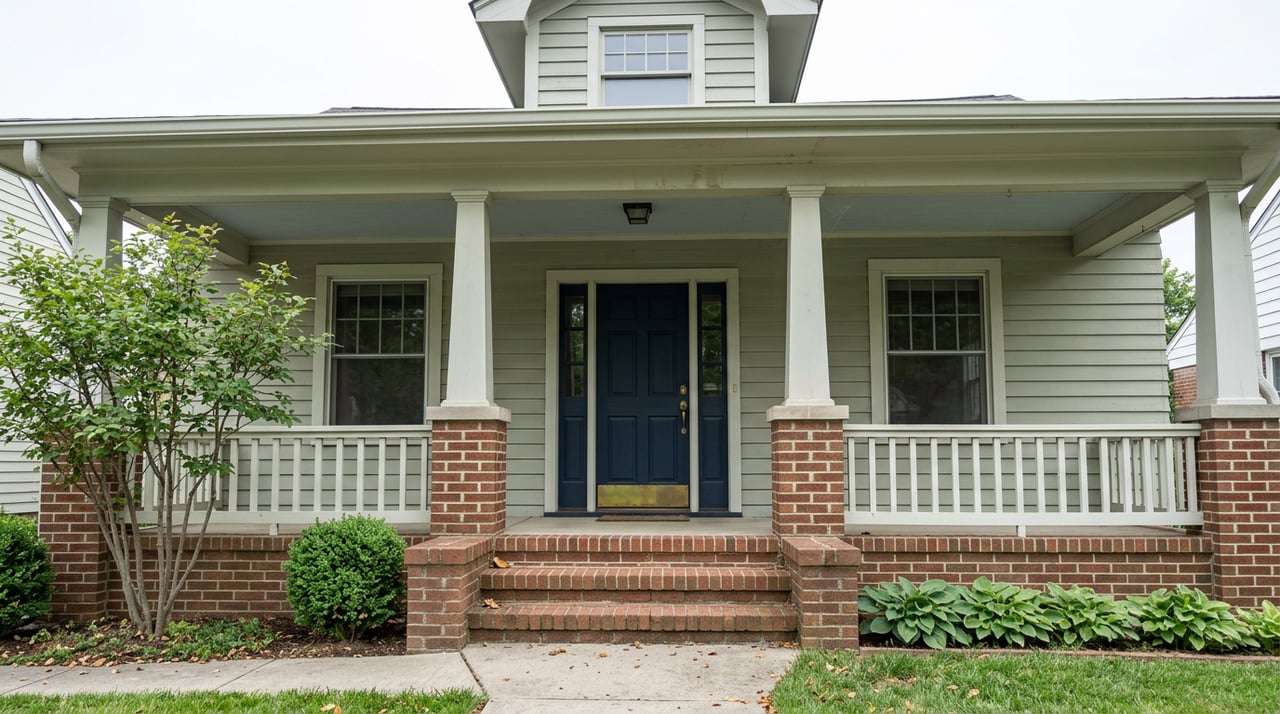
Every few months, the owner of a modest 1930s or 1940s home near downtown Downers Grove gets a letter, a knock, or a call from a builder. The pitch is simple: the house has good bones for demolition, the lot is what has value, and the offer reflects that. Then the seller starts Googling, finds a mention of the Village's Historic Preservation Ordinance, and assumes their decades-old house might be tangled up in a review process that could stall or sink the deal.
For the overwhelming majority of Downers Grove homeowners, that fear is misplaced. Not because the ordinance is toothless, but because of how narrowly it applies. Understanding the actual mechanism, rather than the general anxiety around the word "historic," changes how a seller should read a builder's offer and what leverage they actually hold at the table.
Age Alone Doesn't Trigger Anything
The Village of Downers Grove adopted its Historic Preservation Ordinance on July 3, 2007, with the stated purpose of promoting the protection and perpetuation of buildings of special character or historical value. In 2015, the Village Council revised the ordinance specifically to broaden participation in the landmark program. That revision matters more than its date suggests, because it clarified something sellers routinely get wrong: the Historic Landmark application is an owner-initiated program. Nobody outside the property owner can put a home into the landmark process, and no home enters it automatically because it crossed a particular birthday.
That single fact reshapes the entire conversation around teardown sales. A 90-year-old bungalow near the Tivoli Theatre corridor, or one of the Sears Catalog homes that were shipped in by rail when Downers Grove sat along the Chicago, Burlington and Quincy line and its roundhouse could handle freight cars full of building materials, carries no special demolition restriction simply because it's old. It carries one only if a current or past owner formally petitioned the Village to designate it, and as of the Village's own preservation materials, that has happened to a small handful of properties in the entire community, including the Pierce Downer House, the Drew House, the Ehr House, the John Oldfield House, and the Century of Progress House.
Two Programs Sellers Confuse, With Very Different Consequences
Part of the confusion traces back to the fact that Downers Grove actually runs two separate recognition programs, and they are not interchangeable.
- The Downers Grove Historical Society's Historic Home Program is honorary. It recognizes homes of architectural or historical interest and places no restrictions on exterior changes, additions, or demolition. A plaque or a mention in a historical survey under this program has zero bearing on what a buyer or builder can do with the property.
- Village Landmark designation, granted only through the owner-initiated process described above, does carry real weight. Once a home is designated, a Certificate of Design Appropriateness is required before the Village will approve certain exterior work. That list is specific: demolition, front-facade window and door replacement, additions visible from the street, attached garages, and changes to roofline height or pitch all require review. Driveways, fences, painting, landscaping, routine maintenance, and interior renovations do not.
A seller who assumes their home's inclusion in a historical survey, or a mention in a neighborhood history piece, means the Village will scrutinize a demolition permit is often confusing the honorary program with the binding one. They are not the same thing, and only one of them can slow down a sale.
What the Village's Own Numbers Show
The scale imbalance here is worth sitting with. Village planning staff reported to what was then called the Architectural Design Review Board that between January 1, 2015 and May 18, 2017, 143 single-family homes were demolished in Downers Grove, a pace of roughly 4.8 per month, against a base of about 20,683 housing units counted by the Census at the time. Over that same stretch of village history, the number of homes that had ever received landmark status remained in the single digits, and minutes from the successor Historic Preservation and Design Review Board's September 2025 meeting noted just one additional petition sitting in the queue.
That same September 2025 meeting is a useful data point on its own, because it shows the ordinance is still an active, current topic rather than something frozen in a 2007 or 2015 document. Board members specifically discussed whether a property could lose its landmark protection through a code-violation loophole, a scenario prompted by news of preservation failures elsewhere. The board's chairperson was clear that no such loophole exists in the Downers Grove ordinance and that a Certificate of Design Appropriateness is still required for any demolition of a designated landmark. The rule hasn't loosened. It also hasn't expanded to catch more properties. It simply continues to apply to the small, owner-selected set of homes that opted in.
What Actually Shapes a Builder's Offer
If a structure's age isn't the constraint most sellers should worry about, what is? In practice, it's the Village's zoning code, which governs lot size, setbacks, and how much house can legally sit on a given parcel through the Planning Division's enforcement of the zoning, subdivision, and historic preservation ordinances together with the Downtown Design Guidelines. A builder pricing a teardown offer is running that zoning math first: what can legally be rebuilt on the lot, not how old the current structure happens to be.
That math is also shifting. Through the first half of 2026, the Village ran an Attainable Housing Study in partnership with the Metropolitan Mayors Caucus's Homes for a Changing Region program, gathering resident survey data through June 12, 2026 and presenting initial findings to the Planning and Zoning Commission on July 8, 2026, a meeting that has since concluded. In May 2026, the Village Council adopted a resolution opposing a state housing density proposal, but in that same resolution the Village noted it had already amended its own zoning regulations to allow additional dwelling units and adopted a comprehensive plan supporting what the resolution called missing-middle housing. In other words, while state-level housing policy remains contested, Downers Grove has been quietly loosening what can be built on a redeveloped lot, independent of any preservation question. For a seller weighing a builder's offer against the cost of holding and marketing the property themselves, that zoning trajectory matters more than whether the current house shows up on a historical survey.
What This Means If You're Selling an Older Home
Before treating a builder's letter as either a windfall or a threat, a seller in this position benefits from a short, specific checklist rather than a general worry about the word "historic."
- Check the actual landmark list on the Village's historic preservation page rather than assuming a mention in a historical survey means the same thing as designation.
- Confirm whether the property has ever been formally petitioned for landmark status. If it hasn't, the Certificate of Design Appropriateness requirement doesn't apply, regardless of the home's age.
- Ask what the builder's offer assumes about the zoning district and lot coverage, since that number, not the home's construction date, is what actually caps redevelopment potential.
- Watch for outcomes from the 2026 Attainable Housing Study, since zoning changes tied to that process could affect what a lot supports well after a sale closes.
Frequently Asked Questions
Does a home need to reach a certain age before the Village gets involved in a demolition? No. The trigger is landmark designation, not age. A home can be a century old and never fall under any preservation review if it was never petitioned for landmark status.
If my home was mentioned in a historical survey or the Historical Society's program, does that affect a sale to a builder? The Historical Society's Historic Home Program is honorary and carries no restrictions on demolition or exterior changes. Only formal Village landmark designation does.
How many homes in Downers Grove actually carry this protection? A small number. The Village's own materials name only a handful, including the Pierce Downer House and the Drew House, and board minutes from September 2025 described just one additional petition in progress.
Selling an older home, especially one that might attract a builder's interest, comes with more moving pieces than a typical resale. Knowing which rules actually apply to your specific address, and which ones are simply local folklore, is the difference between negotiating from an informed position and guessing. Alex Abramowicz & Meredith Van Syckle work with sellers across Downers Grove and the western suburbs on exactly this kind of due diligence, from reading a builder's offer against the Village's actual zoning constraints to timing a sale around what's changing in local housing policy. Contact us to talk through what your property's history, or lack of it, really means for your sale.
This article is general information, not legal, tax or financial advice. Consult a qualified professional about your situation.